
|
Eine Bearbeitungssperre steht an, welche von 23. Januar bis einschließlich 25. Januar dauern wird. In dieser Zeit wird das FürthWiki weiterhin lesbar, aber nicht bearbeitbar sein. |
Johnson Barracks (english)
After the war the U.S. Army also occupied the Panzerkaserne near Weikershof. It was named Johnson Barracks in 1949.
History

Initially, a pioneer unit of the 4th US Armored Division – the 24th Engineer Battalion – was stationed here. From 1971 onward, the 1st US Armored Division took over the duties and locations of the 4th AD, and the 16th Engineer Battalion moved to Johnson Barracks. The site also housed the Quartermaster's office and other administrative offices of the division. In the 1960s, heavy M109 self-propelled howitzers were also stationed here. During exercises, they would roar out from Johnson Barracks in convoy across the Fürth South intersection and (unthinkable today) conduct their "small" maneuvers very close to the buildings in Altenberg. The noise from machine guns and cannons, and the dust were immense. On one occasion, a stray shell (fortunately a training shell without an explosive component) flew into Altenberg and hit a roof. This, along with numerous reports of complaints from local residents, was covered extensively in the Fürther Nachrichten. After crossing the Rednitz bridge towards Altenberg, at the first left entrance to the Hainberg area, a red flag was prominently displayed at the start of these actions, indicating that the entire area was off-limits to private individuals due to the risk to life.
On August 15, 1973, a drunken 19-year-old private hijacked one of the armored personnel carriers stationed at Johnson Barracks and sped through Fürth. He ran over a military police vehicle. His rampage only ended when he got stuck in a field.
1992 the 16th Engineer Battalion left Fürth; it was relocated to Bamberg.
After 42 hectares of the 52-hectare barracks site were transferred to the city of Fürth, an investor tore down all the buildings to make way for the Gewerbepark Süd. More than 100 companies have since established themselves there. During construction work in January 2008, large quantities of ammunition left behind by US troops were discovered.
The namesake: Elden H. Johnson
The barracks were named after Private Elden H. Johnson. He was born in 1921 in Bivalue, New Jersey, and served in the 15th Infantry Regiment of the 3rd U.S. Infantry Division. He served with this regiment on the Italian front. On June 3, 1944, he and his unit were ambushed. He drew fire from three tanks, three machine guns, and several enemy soldiers, allowing his twelve comrades to escape. Firing from the hip with his assault rifle, he advanced upright toward the German position, which was only about 20 meters away. From a distance of only about five meters, he disabled one of the machine guns. He changed his magazine and fired on other soldiers, killing or wounding four more before being hit by a burst of machine-gun fire. He sank to his knees and, while kneeling, fired another burst, killing another enemy before Johnson himself died. His comrades were by then safe. For this unprecedented act of bravery and the sacrifice of his life, Private Elden H. Johnson was posthumously awarded the Medal of Honor on May 16, 1945. As a further honor, the barracks in Fürth were named after him in 1949.
US-military prison
In 1971, a new US military prison was planned at Johnson Barracks, as the old one at William O. Darby Kaserne no longer met requirements. The prison in Fürth was one of only two prisons for the entire Federal Republic of Germany.
The site for the prison was chosen at the far end of the barracks grounds, bordering the Main-Donau-Kanal. It was enclosed by a double fence and equipped with four wooden watchtowers with enclosed platforms and roof-mounted spotlights. The site was easily visible from the elevated path along the canal. The building was designed in a cruciform shape, with a two-story main structure running east-west and two single-story wings along what is now Futuriastraße. It was completed in 1976. The new and modern power plant, with its exposed tank and tall chimney, stood approximately 50 meters outside the prison fence to the north, next to the entrance and guardhouse at the prison gate (visible in the aerial photograph under "Pictures"). The prison building contained approximately 100 cells, as well as several large common rooms used only during the day. These common rooms were completely open and had floor-to-ceiling bars, giving the guards along the continuous corridor a full view. The toilet facilities for these common rooms consisted of approximately 10 toilets each, completely open without any partitions, and located directly adjacent to the guard corridor, which was separated by a floor-to-ceiling grille.
The prison was used for lesser cases with sentences of up to six months. Military personnel serving longer sentences were flown to the United States. Today, nothing remains to remind one of the military past of this part of the site. The westernmost part of the prison was located at what is now Futuriastraße 2, and the transverse building lay between Futuriastraße and the Main-Donau-Kanal and has since been replaced by new buildings or used for storage.
Further uses
In 1950, a large US laundry facility was built on the grounds of the former Panzerkaserne. It boasted 150 machines and employed 400 people working in three shifts, providing fresh laundry for 40,000 American soldiers. In the following years, the former German Wehrmacht depot on Schwabacher Straße was transformed into the "Quartermaster Field Maintenance Branch," a massive repair facility and storage depot for the entire Nuremberg-Fürth district of the U.S. Army. This area encompassed military units as far afield as Regensburg, Straubing, Bayreuth, Grafenwöhr, and Ansbach. German workers in various repair departments and supply facilities, such as a coffee warehouse and scrap metal and waste processing plant, also managed enormous quantities of accumulated materials, some of which were unusable, beyond repair, or simply unprofitable. These materials were then offered to German companies for disposal.
Eyewitness accounts
Regarding construction work at the military prison:
"Access to the construction site was very strictly regulated; every employee received a photo ID which was checked at the entrance gate of Johnson Barracks, as they were on military base. Some employees didn't receive one, and it was then a matter of speculation whether this was due to their recent relocation as ethnic Germans from the former USSR, or whether they were perhaps still on the MP's files from a previous encounter with GIs at the Gelber Löwe or Kristallpalast."
"Many components of this building came directly from the USA, which caused more than a few head-shaking moments among the tradesmen (I witnessed this myself during visits to the construction site). Almost all the technical equipment, apart from the building materials, was sourced from the US, even though it was surprising that the electrical system here was 220 volts instead of the 110 volts used in the US. Besides the cell doors, windows, and bars, the very large partition grilles made of special steel, impervious to sawing and grinding, arrived fully welded from the US via Bremerhaven to Fürth. These were for the floor-to-ceiling partition between the guards' corridor and the enormous common rooms and were certainly over 6 meters long. At least the high transport costs were less of an issue, since the entire facility was paid for from the US defense budget."
"The very strict hygienic conditions for the water pipes were also somewhat unusual, because every completed system had to be filled with chlorine according to a very specific, prescribed schedule, and after the contact and waiting period, flushed several times to remove even the last possible contaminants, such as oil residue from thread cutting or sealant that might have gotten inside the pipes. This procedure was also mandatory in U.S. Army housing blocks like the Kalbsiedlung for new construction and renovations." [1]
See also
Literature
- Sternenbanner und Kleeblatt, Bernd Jesussek, 1996
- 10 Jahre Konversion: Der Fürther Weg, Stadt Fürth, 2005
- »Little America«. Militär und Kasernen von 1945 - 1995. In: Auf in den Süden! Geschichte der Fürther Südstadt, 2017, Sandberg Verlag, ISBN 978-930699-94-0, S. 78 - 99
- Überraschende Jahrhundertaufgabe. Konversion! Die Südstadt verändert ihr Gesicht. In: Auf in den Süden! Geschichte der Fürther Südstadt, 2017, Sandberg Verlag, ISBN 978-930699-94-0, S. 100 - 117
- Bernd Jesussek: Die Amerikaner in Fürth 1945 - 1995, Ausstellungskatalog, 2018, 59 S.
Weblinks
- Nuremberg Military Community: Fotos der Kaserne
- Nürnberg Military Area - Johnson Barracks
- Informationen der Stadt Fürth zum Gewerbepark Süd auf dem Grund der Johnson Barracks
- 10 Jahre Konversion - Der Fürther Weg (Seiten 1-45)
- 10 Jahre Konversion - Der Fürther Weg (Seiten 46-91)
- 10 Jahre Konversion - Der Fürther Weg (Seiten 92-Ende)
Individual references
- ↑ Zeitzeugenbericht, Archiv FürthWiki, Aktennr. '37'
Videos
Photos
Bilder als Galerie / Tabelle anzeigen, sortieren und filtern
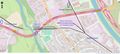
Ehemaliger Haltepunkt "Fürth-Süd" der Bibertbahn mit damals bahntechnisch angebundenem ... Ehemaliger Haltepunkt "Fürth-Süd" der Bibertbahn mit damals bahntechnisch angebundenem Kohlenlagerplatz der US Johnson Barracks, dem heutigen Gewerbepark Süd
Lizenz: CC BY-SA 3.0
Lageplan des ehem. US Militär Gefängnis in den Johnson Barracks Lizenz: CC BY-SA 3.0
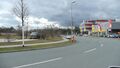
2010: Blick in die Benno-Strauß-Straße Richtung Schwabacher Straße (früherer Haupteinfahrt in die ... 2010: Blick in die Benno-Strauß-Straße Richtung Schwabacher Straße (früherer Haupteinfahrt in die Johnson Barracks mit Gebäude Complex Gewerbehof im März 2010
Urheber: Norbert Pietsch
Lizenz: CC BY-SA 3.0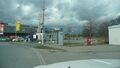
2010: Blick in die Benno-Strauß-Straße Richtung Schwabacher Straße mit Gebäude Complex Gewerbehof. ... 2010: Blick in die Benno-Strauß-Straße Richtung Schwabacher Straße mit Gebäude Complex Gewerbehof. Rechts daneben stand das frühere Hauptgebäude der Johnson Barracks, im Hintergrund der Main-Donau-Kanal im März 2010
Urheber: Norbert Pietsch
Lizenz: CC BY-SA 3.0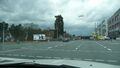
Kreuzung Schwabacher Straße Abfahrt rechts in den Gewerbepark Süd mit Bürogebäude Complex ... Kreuzung Schwabacher Straße Abfahrt rechts in den Gewerbepark Süd mit Bürogebäude Complex Gewerbehof. Links Zufahrt zur Straße Am Stübleacker. Bildmitte Kanalbrücke Schwabacher Straße im März 2010
Urheber: Norbert Pietsch
Lizenz: CC BY-SA 3.0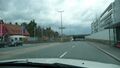
Schwabacher Straße rechts Gewerbepark Süd mit Bürogebäude Complex Gewerbehof. Früher standen an ... Schwabacher Straße rechts Gewerbepark Süd mit Bürogebäude Complex Gewerbehof. Früher standen an gleicher Stelle 2 große Kasernengebäude der ehem. Johnson Barracks. Links Kneipe "Malibu" das heutige Barhaus Dillinger, Bildmitte Kanalbrücke Schwabacher Straße im März 2010
Urheber: Norbert Pietsch
Lizenz: CC BY-SA 3.0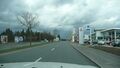
Schwabacher Straße, Blickrichtung Kanalbrücke Schwabacher Straße – rechts neue Firmen im ... Schwabacher Straße, Blickrichtung Kanalbrücke Schwabacher Straße – rechts neue Firmen im Gewerbepark Süd der früheren Kasernenanlage Johnson Barracks im März 2010
Urheber: Norbert Pietsch
Lizenz: CC BY-SA 3.0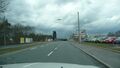
Schwabacher Straße, Blickrichtung Kanalbrücke Schwabacher Straße – rechts neue Firmen im ... Schwabacher Straße, Blickrichtung Kanalbrücke Schwabacher Straße – rechts neue Firmen im Gewerbepark Süd der früheren Kasernenanlage Johnson Barracks im März 2010
Urheber: Norbert Pietsch
Lizenz: CC BY-SA 3.0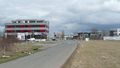
2010: Gewerbepark Süd Richtung Benno-Strauß-Straße von der Straße Am Stübleacker aus. Früherer ... 2010: Gewerbepark Süd Richtung Benno-Strauß-Straße von der Straße Am Stübleacker aus. Früherer Haupteingang der Johnson Barracks.
Urheber: Norbert Pietsch
Lizenz: CC BY-SA 3.0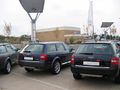
Audizentrum Fürth mit dem längst abgerissenen Blockheizkraftwerk der ehem. Johnson Barracks an der ... Audizentrum Fürth mit dem längst abgerissenen Blockheizkraftwerk der ehem. Johnson Barracks an der Georg-Benda-Straße/Ecke Schwabacher Straße, 2003
Urheber: Norbert Pietsch
Lizenz: CC BY-SA 3.0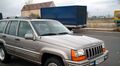
Benno-Strauß-Straße vor Einmündung in die Tucherstraße mit letzten Teil der Johnson Barracks und dem ... Benno-Strauß-Straße vor Einmündung in die Tucherstraße mit letzten Teil der Johnson Barracks und dem letzten Magazin Gebäude im Hintergrund. Später alles abgerissen, heute Gewerbepark Süd, im Oktober 2003
Urheber: Norbert Pietsch
Lizenz: CC BY-SA 3.0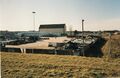
letzter Rest der Johnson Barracks im südlichen Bereich mit dem letzten von 9 Magazinhäusern. Alles ... letzter Rest der Johnson Barracks im südlichen Bereich mit dem letzten von 9 Magazinhäusern. Alles längst abgeräumt und neu bebaut. Im Hintergrund die Schwabacher Straße, aufgenommen vom Main-Donau-Kanal im Januar 1998
Urheber: Klaus-Peter Schaack
Lizenz: CC BY-SA 3.0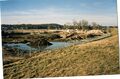
Blick über das abgeräumte ehem. Militärgelände der Johnson Barracks am Kanal entlang Richtung ... Blick über das abgeräumte ehem. Militärgelände der Johnson Barracks am Kanal entlang Richtung Kanalbrücke Schwabacher Straße. In der Bildmitte hinten stand das große Stabsgebäude, im Vordergrund vorne befand sich das US Gefängnis. Die große Bäume sind heute noch vorhanden, im Januar 1998
Urheber: Klaus-Peter Schaack
Lizenz: CC BY-SA 3.0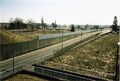
Blick von der Kanalbrücke Schwabacher Straße auf das abgeräumte ehem. Kasernengelände ... Blick von der Kanalbrücke Schwabacher Straße auf das abgeräumte ehem. Kasernengelände Johnson Barracks, heute Gewerbepark Süd; Aufnahme vom Januar 1998 – Der damals neue Leichtmetallzaun, der bis zur Kreuzung Fürth-Süd ging, wurde postwendend verschrottet, genau wie das neue gasbetriebene Blockkraftwerk der Ex-Kaserne; in Bildmitte steht heute der Complex-Gewerbehof.
Urheber: Klaus-Peter Schaack
Lizenz: CC BY-SA 3.0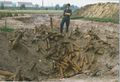
Bau der Vershofenstraße auf Nürnberger Seite. In einem Bombentrichter entsorgte Reste der ... Bau der Vershofenstraße auf Nürnberger Seite. In einem Bombentrichter entsorgte Reste der Flak-Batterie Höfen. Im Hintergrund Main-Donau-Kanal, Südwesttangente und die Speichergebäude der Johnson Barracks. Um 1995
Urheber: Werner Scheuerer
Lizenz: CC BY-SA 3.0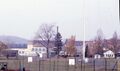
Die Drahtverspannung des MW-Sendemastes in der Johnson Barracks (1994) Urheber: Dr. Peter Tischendorf

Eisenbahngleis am Lagerhaus 937 (1994) Urheber: Dr. Peter Tischendorf
Lizenz: CC BY-SA 3.0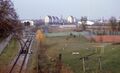
Eisenbahnzufahrt zur Johnson Barracks von Süden (unter der Rothenburger Straße), 1994 Urheber: Dr. Peter Tischendorf
Lizenz: CC BY-SA 3.0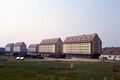
Die Drahtverspannung des MW-Sendemastes in der Johnson Barracks (1994) Urheber: Bernd Jesussek
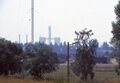
Der MW-Sendemast in der Johnson Barracks. Im Hintergrund das Großkraftwerk Franken (1994) Urheber: Bernd Jesussek
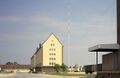
Der MW-Sendemast in der Johnson Barracks (1993) Urheber: Marco Frömter
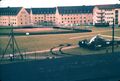
Baseballfeld zwischen der Kalbsiedlung und der Johnson Barracks (1958). Urheber: Jim Moran
Lizenz: CC BY-SA 3.0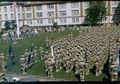
Das 16. Pionierbataillon ist aus dem Irakkrieg zurück und feiert in der Johnson Barracks (10. Mai ... Das 16. Pionierbataillon ist aus dem Irakkrieg zurück und feiert in der Johnson Barracks (10. Mai 1991)
Lizenz: CC BY-SA 3.0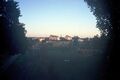
Eisenbahnzufahrt zur Johnson Barracks von Süden (unter der Rothenburger Straße), ca. 1990 Urheber: Marco Frömter
Lizenz: CC BY-SA 3.0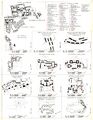
Straßen- und Gebäudeplan mit den U.S. Army Standorten in der Metropolregion, ca. 1985 Urheber: U.S. Army
Lizenz: copyright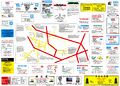
Straßenplan mit den U.S. Army Standorten und Geschäften, Gastronomie und Unternehmen für die U.S. ... Straßenplan mit den U.S. Army Standorten und Geschäften, Gastronomie und Unternehmen für die U.S. Army Beschäftigten in der Metropolregion, ca. 1985
Urheber: U.S. Army
Lizenz: copyright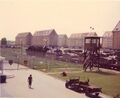
Bahnverladung von Pioniergerät neben dem Gefängnis (1974) Urheber: Jim McKenna
Lizenz: CC BY-SA 3.0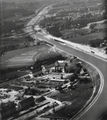
Überführung des Main-Donau-Kanals über das Rednitztal, kurz nach Fertigstellung, Luftbild ca. 1972 ... Überführung des Main-Donau-Kanals über das Rednitztal, kurz nach Fertigstellung, Luftbild ca. 1972 -
in Bildmitte die Kanalbrücke Rednitz, rechts davon die Kanalbrücke Schwabacher Straße und im Vordergrund die Johnson Barracks
Lizenz: CC BY-SA 3.0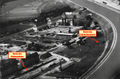
Reste von Diebs- und Stöckichgraben auf dem Gelände der Johnson Barracks; Luftbild ca. 1972 Lizenz: CC BY-SA 3.0
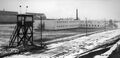
Neubau des Militärgefängnisses in der Johnson Barracks 1971, vom Kanaldamm aus gesehen Urheber: Knut Meyer/VNP
Lizenz: copyright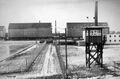
Neubau des Militärgefängnisses in der Johnson Barracks 1971, vom Kanaldamm aus gesehen Urheber: Knut Meyer/VNP
Lizenz: copyright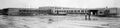
Neubau des Militärgefängnisses in der Johnson Barracks 1970 Urheber: Knut Meyer/VNP
Lizenz: copyright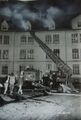
Dachstuhlbrand in der Johnson Barracks 1971 Lizenz: copyright
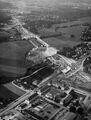
Bau der Rednitztalbrücke und der Trogbrücke (1970). Unten die Johnson Barracks und die Umleitung der ... Bau der Rednitztalbrücke und der Trogbrücke (1970). Unten die Johnson Barracks und die Umleitung der Schwabacher Straße
Lizenz: copyright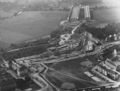
Luftbild vom Bau der Kanalbrücken Rednitz und Schwabacher Straße sowie der Straßenbrücke Rednitztal, ... Luftbild vom Bau der Kanalbrücken Rednitz und Schwabacher Straße sowie der Straßenbrücke Rednitztal, Ende 1960er Jahre, links im Vordergrund Gebäude der Johnson Barracks
Urheber: unbekannt
Lizenz: CC BY-SA 4.0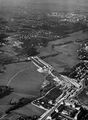
Bau der Rednitztalbrücke und der Trogbrücke (1969). Unten die Johnson Barracks und die Umleitung der ... Bau der Rednitztalbrücke und der Trogbrücke (1969). Unten die Johnson Barracks und die Umleitung der Schwabacher Straße
Lizenz: copyright
Blick von Anlage IV in südlicher Richtung vor Bau der Hans-Bornkessel-Straße. Im Hintergrund sind ... Blick von Anlage IV in südlicher Richtung vor Bau der Hans-Bornkessel-Straße. Im Hintergrund sind die Speichergebäude der Johnson Barracks zu erkennen. Aufnahme um 1966
Urheber: Werner Scheuerer
Lizenz: CC BY-SA 3.0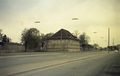
Äußere Schwabacher Straße Richtung Kreuzung Fürth-Süd. Links die ehem. Bundeswehr Standortverwaltung ... Äußere Schwabacher Straße Richtung Kreuzung Fürth-Süd. Links die ehem. Bundeswehr Standortverwaltung im südl. Teil der Johnson Barracks, dahinter Gebäude des ehemaligen Pulvermagazins. Rechts hinten die Firma Barthelmess und danach das alte Zollhaus, 1966
Urheber: Norbert Pietsch
Lizenz: CC BY-SA 3.0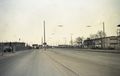
Schwabacher Straße Stichstraße vor Firma Kurz links. Im Hintergrund die Johnson Barracks und rechts ... Schwabacher Straße Stichstraße vor Firma Kurz links. Im Hintergrund die Johnson Barracks und rechts nach dem Gebäude liegt heute die Tucherstraße, 1966
Urheber: Norbert Pietsch
Lizenz: CC BY-SA 3.0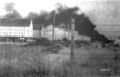
In der Johnson Barracks werden 1962 Gummipolster von Panzerketten ausgebrannt Lizenz: copyright
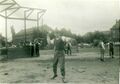
Baseballfeld zwischen der Kalbsiedlung und der Johnson Barracks (1958). Urheber: Jim Moran
Lizenz: CC BY-SA 3.0
Panzer-Abwehr-Abteilung 17 bei Weikershof, gel Dez 1938 Urheber: unbekannt
Lizenz: CC BY-SA 4.0
Panzer-Abwehr-Abteilung 17 bei Weikershof, ngl ca 1938 Urheber: unbekannt
Lizenz: CC BY-SA 4.0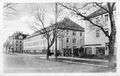
Panzer-Abwehr-Abteilung 17 bei Weikershof, um 1939 Urheber: unbekannt
Lizenz: CC BY-SA 3.0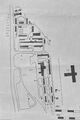
Gebäudeplan und Eisenbahnzufahrt zur Johnson Barracks von Süden Lizenz: CC BY-SA 3.0
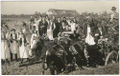
Kirchweihgesellschaft an der Weikershofer Straße, ortsauswärts. Im Hintergrund ist die ehemalige ... Kirchweihgesellschaft an der Weikershofer Straße, ortsauswärts. Im Hintergrund ist die ehemalige Panzerkaserne zu sehen (nach 1945 Johnson Barracks). Aufnahme um 1950
Urheber: unbekannt
Lizenz: CC BY-SA 3.0


(See German Site)